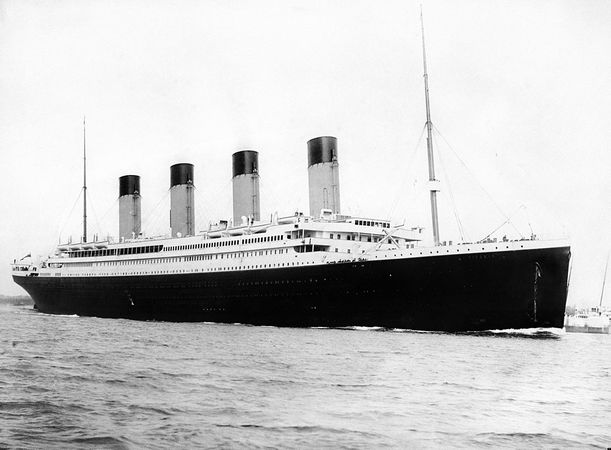
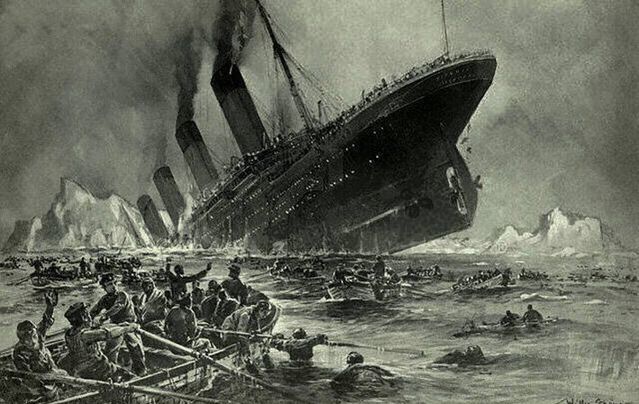
“It hardly bears thinking about that if there had been sufficient boats that night…every soul aboard could have been saved, since it was two-and-a-half hours after she struck that she tilted her massive stern into the heavens and sank by the head, taking with her all that were unprovided for.” – Arthur Rostron, Captain of the rescue vessel Carpathia (‘Home From The Sea’ 1931)
“We are now having 40-plus-thousand new cases a day. I would not be surprised if we go up to 100,000 a day if this does not turn around. I think it is important to tell you and the American public that I’m very concerned because it could get very bad.” – Dr. Anthony Fauci, Congressional Testimony, June 30, 2020
“Except for the [life] boats beside the ship and the icebergs, the sea was strangely empty. Hardly a bit of wreckage floated – just a deck chair or two, a few life belts, a good deal of cork.” * – Arthur Rostron, Captain of the Carpathia (‘Home From The Sea’ 1931) *cork was the material used for the life preservers
“… I think we’re going to be very good with the coronavirus. I think that at some point that’s going to sort of just disappear. I hope.” – President Donald Trump, Fox News, July 1, 2020.
Multiple Warnings [Source: Brittanica]
Throughout much of the voyage the wireless radio operators on the Titanic, Jack Phillips, and Harold Bride, had been receiving iceberg warnings, most of which were passed along to the bridge. The two men worked for the Marconi Company, and much of their job was relaying passengers’ messages. On the evening of April 14, 1912 the Titanic began to approach an area known to have icebergs. Smith slightly altered the ship’s course to head farther south. However, he maintained the ship’s speed of some 22 knots.
At approximately 9:40 PM the Mesaba sent a warning of an ice field. The message was never relayed to the bridge. At 10:55 PM the nearby Leyland liner Californian sent word that it had stopped after becoming surrounded by ice. Phillips, who was handling passenger messages, scolded the Californian for interrupting him.” Two lookouts, Frederick Fleet and Reginald Lee were stationed in the crow’s nest of the Titanic. Their task was made difficult by the fact that the ocean was unusually calm that night: because there would be little water breaking at its base, an iceberg would be more difficult to spot. In addition, the crow’s nest’s binoculars were missing.
At approximately 11:40 PM, about 400 nautical miles south of Newfoundland, an iceberg was sighted and the bridge was notified. First Officer William Murdoch ordered both the ship “hard-a-starboard”—a maneuver that under the order system then in place would turn the ship to port (left)—and the engines reversed. The Titanic began to turn, but it was too close to avoid a collision.
#####
Note: My apologies once again for the delay between posts. I am finding it increasingly difficult to write about the pandemic while restricting the post within data-only constraints. A side effect is that this has prompted my thinking to meander along a few more allegorical lines than usual, leading to a slightly longer post this time around.
#####
Anyone with delicate sensibilities need read no further. Some “may find the remainder of this post disturbing,” as they say on the TV.
When, eons ago [March 2020], I set out to document the Covid-19 pandemic, the data appeared to portend a historical, cataclysmic period. Unfortunately, after several months and 25 posts this sense of foreboding seems to be growing ever more justified. At one point there was an inkling that warmer weather might help mitigate the pandemic — that Covid would follow the pattern set in 1918 and not return until Fall. But the virus seems much more interested in continuing its mayhem without surcease.
This may be largely due to inventor Willis Carrier. In 1918 his air conditioning contraption was not yet commonly available, so when summer came along many went outside to escape stifling homes, where UV and breezes helped suppress the spread. Today we enjoy temperature-controlled environments, often retreating to enclosed areas away from sun and wind. Consequently, it is not unreasonable to hypothesize that this is contributing to the spread and current spiking of Covid cases to the highest levels yet recorded for this pandemic.
Okay — let’s look at the data…
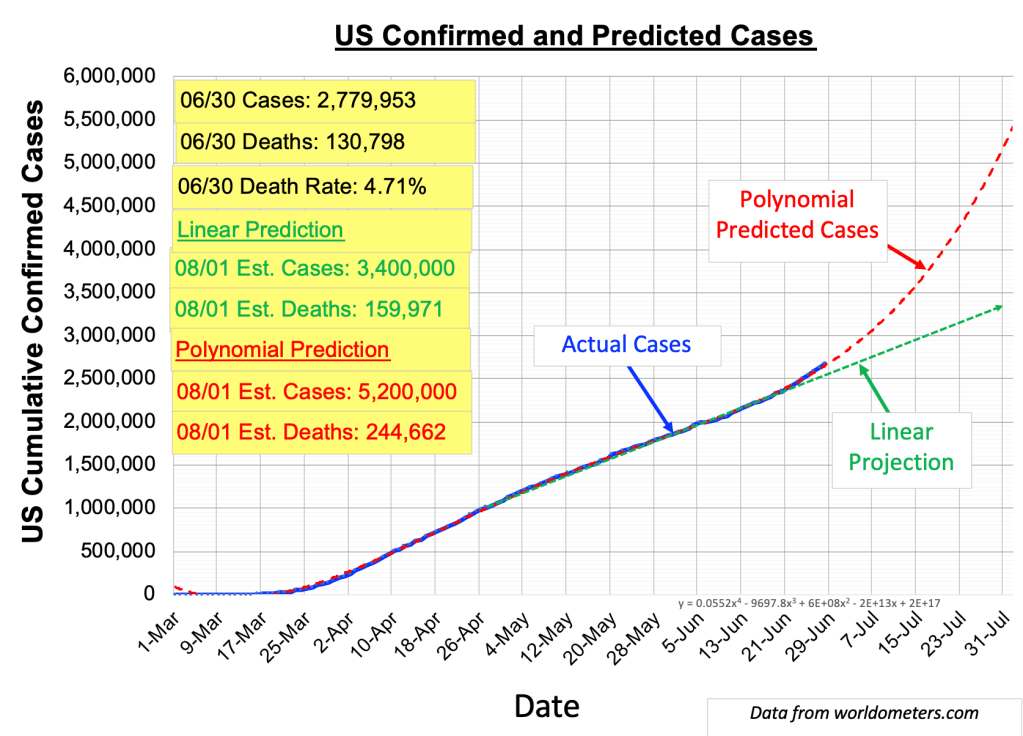
After a hopeful period of apparent indecision, the data (blue curve) has decided to drift upwards from the green linear projection and begin to follow the exponential (red) trend curve. This is bad. Really bad. This first “wave” never ended (i.e., dropped to consistently ever-lower levels). The spiking we see in this data points to a significant, rapid increase in cases – very likely for several more months. Dr. Fauci may have drawn from similar data for his 100,000 case/day prediction.
The polynomial projection in the chart above — on the order of 5,000,000 cases and 250,000 deaths by August 1 – is much more pessimistic than sophisticated models (IHME) often referenced in the media that currently predict ~150,000 deaths by August 1. At the risk of crawling out on a limb I’m guessing that the number of deaths will ultimately lie somewhere in between, say 200,000 or so. Either way, not too reassuring. At the risk of repeating previous posts — this thing is real. And as much as human nature leads us to want/need/think/hope that it’s almost over — “We ain’t seen nuthin’ yet.” We have not yet struck the iceberg.
#####
One more observation before we get to baking cookies.
…as if the Titanic weren’t enough…
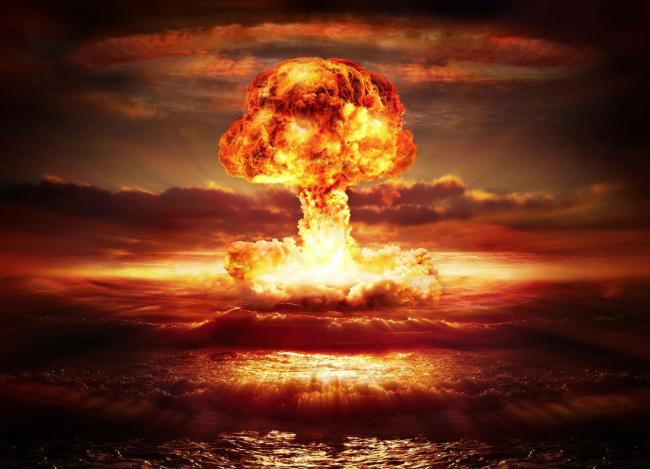
In 1945, as Colonel Tibbets banked the Enola Gay away from the flash that was Hiroshima, he knew that he had, in the service of his country during time of war, wrought an almost incomprehensible loss of life. Over 130,000 people died that day or soon thereafter (estimates vary). President Truman had made the decision. His motivation? End the war and save countless American and enemy lives. [Debate continues as to other influencing factors, but that is beyond the scope of this article].
To date Covid has wrought over 130,000 deaths in our country. Motivation? The question makes no sense. The virus has no motivation other than to (literally) mindlessly reproduce. There are those who think that the number of cases could have been significantly reduced had we as a country been collectively motivated to do so. Unfortunately, the data to date strongly suggests a trend, ultimately, toward herd immunity. That is, about 70% of the population infected.
As calculated in an earlier post, a herd infection rate of 70% will ultimately yield 70% x 330 million population = 230 million cases. At a fatality rate of 0.5% this corresponds to 1.15 million deaths. Is this likely? Perhaps. Perhaps not, given therapeutics and a vaccine hopefully yielding a much lower fatality rate than 0.5%. Is this scary? Absolutely. Is it a motivator? Given the success of containment efforts to date – it does not appear to be a strong motivator, human nature triumphing over logic. Yeah, sorry about that.
….. Okay. Do you think I might’ve overdone it a bit with the bad news? Fine. Let’s bake some cookies…
#####
Wait
Grandma surveys the damage.
“Otto? Where are you?”
He’s hiding behind fingers splayed across his three year old face.
Grandpa interrupts. “I don’t know where he is.”
Grandma eyes Grandpa with a “what have you two been up to” grin.
“I can hear you giggling Otto.”
The galley is strewn with flour splotches, widespread scatterings of chocolate chips, and one – no, two – glistening eggs oozing inches from Grandma’s toes.
“Here I am!” Otto shouts, revealing what can be seen of his face.
“You are a mess, young man,” Grandma frowns, taking a damp cloth to Otto’s chocolate mustache.
“I like chocolate chips bestest,” Otto mumbles, wincing from Grandma’s ministrations.
“So I see,” she smiles.
“Yes, and brown sugar too.”
“I’m not surprised.”
“But… no cookies,” Otto whispers, eyeing the kneaded lump of dough on the cookie sheet.
Grandma looks at Grandpa.
“Well,” Grandpa says. “We did everything right, but…”
“I should’ve known. The galley chief gave us permission to use his kitchen after lunch. Now he needs to prepare dinner for thousands of people. We better hurry and get this cleaned up.”
“A thousands of people?” Otto’s eyes widen. “That’s a lot, right Grandpa? More than thirty. Or a hundred.”
“More than a hundred, Otto. “We better get to it.”
“Okay,” sighs Otto, reaching for a towel.
“You two,” Grandma says, “what happened?”
“We made the cookies and then they didn’t work,” Otto explains.
“I can see that.”
Otto goes on. “We made the dough and put in extra chocolate chips because Grandpa likes them. Me too.”
“Yes?”
“Then we mixed it all up in that big bowl over there and used a spoon and made about a hundred and thirty big lumps on the pan. Grandpa said they would flatten into cookies, but I wasn’t worried.”
“Okay…”
“Then…we put them in the oven at thirty seven degrees I think for twenty seconds, right Grandpa?”
“Something like that.”
“Twenty seconds?” Grandma smiles.
“But Grandma… it wasn’t working. Grandpa said we had to wait longer, so we waited and waited and waited and waited…” Otto sighs.
“I see.”
“I kept saying ‘now Grandpa?’ and he kept saying wait, wait, wait… for forever. I could even smell them they were cooking so much.”
“And then what happened?”
“Grandpa said ‘fine, fine, and he took that fat glove on his hand and pulled out the pan. It was very hot.”
“But what happened?” Grandma points at the mess of dough.
“Oh, they were almost done, but not yet. So we tried to mash down each clump but the dough was still sticky and pretty soon all the cookies got mixed up into a big mess because the dough was still all gooey and so we made a mess and then… no more cookies. Just a big lump.”
Otto’s frown tugs at Grandpa.
“It was my fault. I should have I insisted we wait until they were done.”
“So it appears,” says Grandma.
“Can we salvage anything?” Grandpa says.
Grandma touches the dough. “I think you need to start over.”
Otto perks up. “Okay.”
“Not any more today, though — the chief…”
Otto gives his Grandpa that “please?” look.
“Sorry Otto. Looks like we’ll have to wait until tomorrow.”
“But Grandpa…”
“Maybe tomorrow,” Grandma promises, knotting her apron.
Verla awakens first and calls to Otto in the bunk below.
“I don’t know,” Otto mumbles.
”You don’t know what?”
“I don’t know.”
“You’re silly.”
Verla’s twin brother is, somehow, her best friend and biggest bother. My brother the bother.
“I get to make cookies with Grandma today.”
“Nuh uh. Grandpa and me.”
“Nuh uh. You did yesterday and now it’s my turn.”
“I’m gonna ask Grandpa. You’ll see.”
After lunch and much animated discussion both Otto and Verla stand in the galley with Grandma.
“We won’t hurry up too much today, right Grandma?“ Otto announces with a stern nod.
“No, we will wait until they’re done.”
“We have to wait until they’re done,” Otto informs Verla.
Verla nods, returning Grandma’s wink.
And so the afternoon cookie-making commences, with much tasting and oohing and aahing and “I wanna do it’s.”
“Okay,” Grandma announces as the last dollop sticks to the cookie sheet. “Now, the oven is very hot. You two stay right here.”
Moments later the sweet smell of chocolate chip cookies begins filling the galley.
“Are they done yet?” Otto urges. “Can we take them out now?”
“Not yet Otto.”
“Not yet Otto,” Verla echoes.
Otto studies his feet dangling from the stool, swinging ever faster, then slower, then faster.
Verla looks down at her own feet, swaying ever so gently.
When the bell finally rings Otto jumps to the floor.
“Okay,” says Grandma. “I think they’re done.”
“Yay!”
“Now, we have to wait until they cool a little first,” Grandma says, setting the sheet atop an impossibly wide stovetop. How many burners are there?
“Now?” asks Otto.
“Not yet, I just took them out.”
“Now?” he asks no more than three seconds later.
Grandma smiles. “Let’s get some glasses of milk. What do you think?”
“Okay!”
“Now?” ask Otto and Verla, wiggling back onto their stools.
“Now,” beams Grandma, sliding a platter of warm cookies between them. “You two share now.”
“Oh, we will,” they promise, reaching out.
As Grandma absorbs this warm memory she feels a slight tremble, then a lurch. A moment later – no, a few moments later – the galley lights flicker and die. She gathers Otto and Verla into her arms, heart pounding, sweet chocolate breaths of innocence drawing sudden, unexpected tears.
“It’s okay,” she swallows. “Shhh now. The lights will come on soon.”
She hears the platter slip along the counter and listens for a crash but hears nothing but a weak splash.
So quiet now. The murmur of engines has faded away. Confused, she feels her ankles grow suddenly cold. Icy.
#####
One more thing:
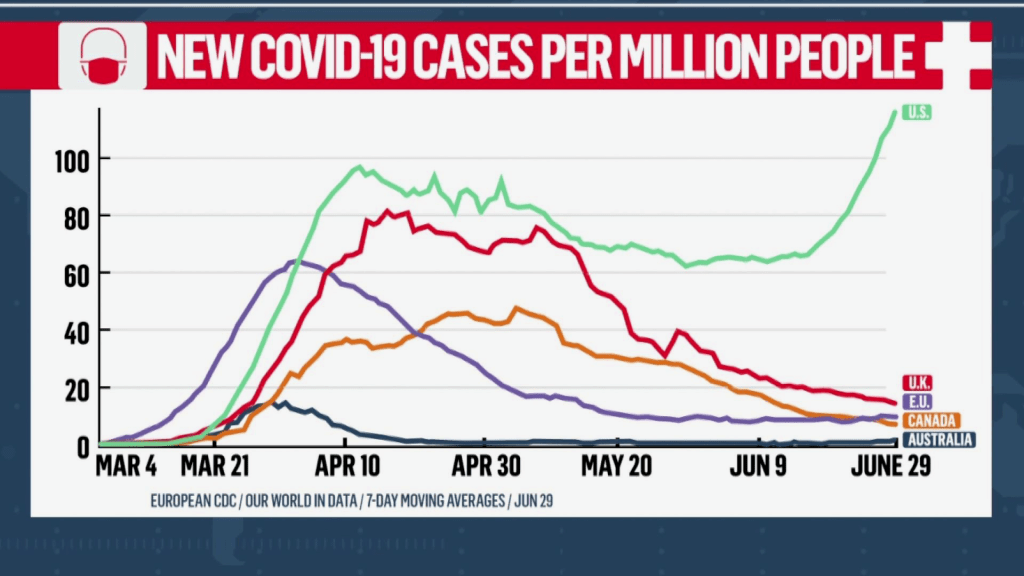
That green curve is heading up with nary a plateau in sight… ‘nuf said.
 RoboSapiens — AI: Artificial Intelligence and Our Future